German health insurance, simplified. Your English-speaking broker.

Independent advice on private health insurance, in English, at no cost to you. One 30-minute Zoom call shows which cover fits you and what you would pay.


Where to start
Find your situation
Employed above the limit
In a new job over €77,400 a year (2026), you can choose private cover from day one.
Freelance or self-employed
You can go private at any income, from your first day on your own.
Switching from public cover
Get better cover for less. We handle the switch.
Already private
We check whether your plan still fits your life and how to improve your cover, your premium, or both.
What to do when your premium risesFree plan review: book a call





Client reviews
What our clients actually think.
About us
Who is behind TheGoodBroker?
TheGoodBroker is an independent insurance broker, licensed under §34d, that advises only on private health insurance. Founder Jonas Marx has advised English speakers since 2018, by video, anywhere in Germany. By now, that is more than 900 clients. We are not an insurer and not a comparison site: we compare the whole private market and work for you, not for an insurer. You keep one contact for every question, long after you sign.
- Advising since
- 2018
- English-speaking clients
- 900+
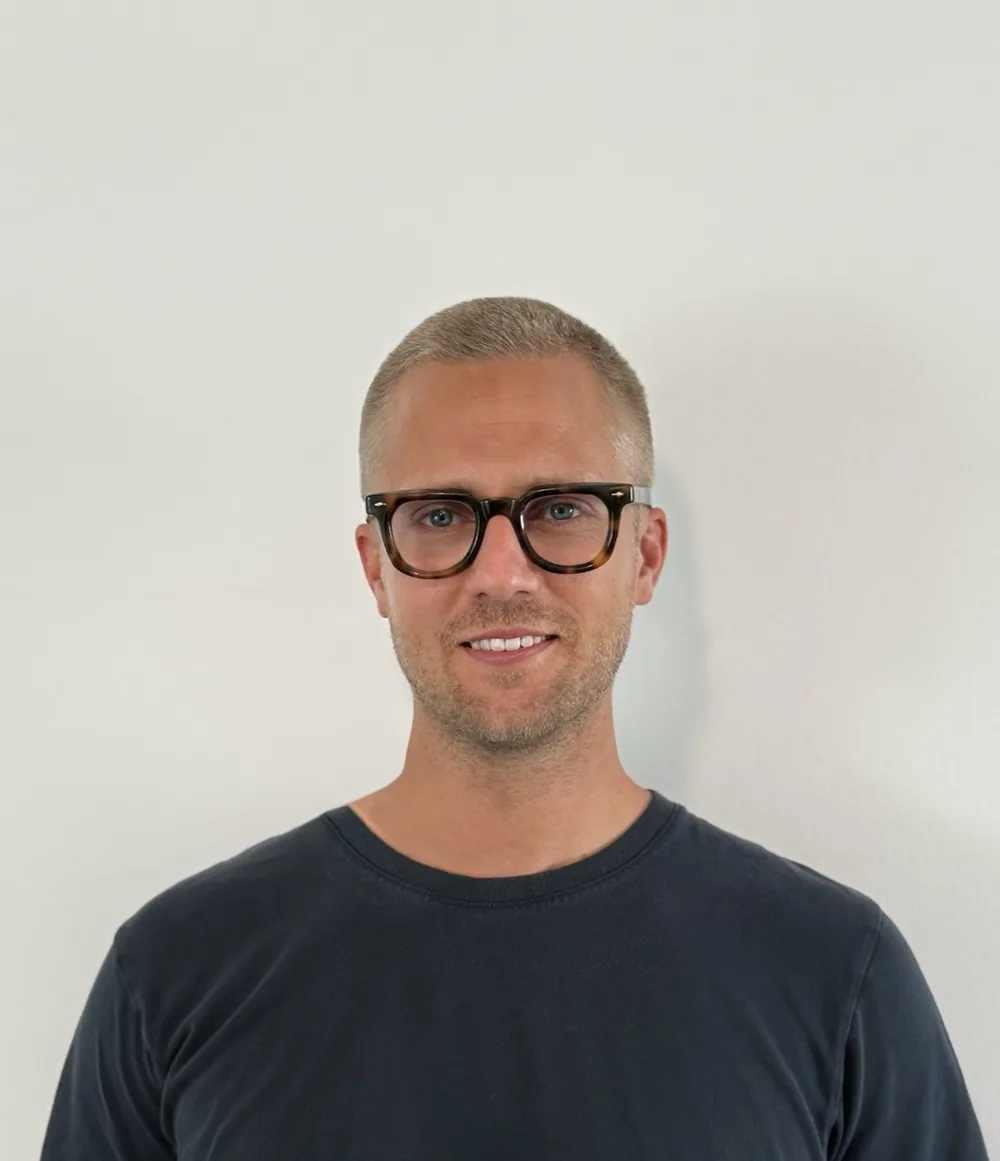
“Expats deserve the same advice German speakers take for granted. No language barrier. No bias. Just honesty.”
Jonas Marx
Founder & licensed broker
Register no. D-ON7P-Y7Q94-16
Cost of advice
Who pays your health insurance broker?
Our advice costs you nothing. The insurer you choose pays us a commission, which every private premium already includes, so your premium is the same with or without a broker. By law, we act for you, whichever insurer pays it. The commission covers the call, the comparison, the application and our help in the years after. A switch to another tariff with your insurer costs you nothing either. If public cover suits you better, we say so.
| Broker (us) | Insurer's agent | Direct | |
|---|---|---|---|
| Whose side | Broker:Yours, by law | Insurer's agent:The insurer's | Direct:The insurer's |
| Tariffs compared | Broker:The whole market | Insurer's agent:One insurer, sometimes a few | Direct:One insurer |
| Health check before you apply | Broker:Anonymous, across insurers | Insurer's agent:With one insurer | Direct:With one insurer |
| In English | Broker:Always | Insurer's agent:Depends on the agent | Direct:Depends on the insurer |
| Cost to you | Broker:Nothing, the insurer pays us | Insurer's agent:Nothing, the insurer pays them | Direct:Same premium, no adviser of your own |
| Who answers after signing | Broker:Your broker, for years | Insurer's agent:Your agent, for that insurer | Direct:A hotline |
You. Are. Not. The. Problem. This system is.
You don’t have to figure it out alone. Here’s how we do it.
Five steps
Four to get covered. One to stay covered.
From first call to fully insured. And the bit that comes after.
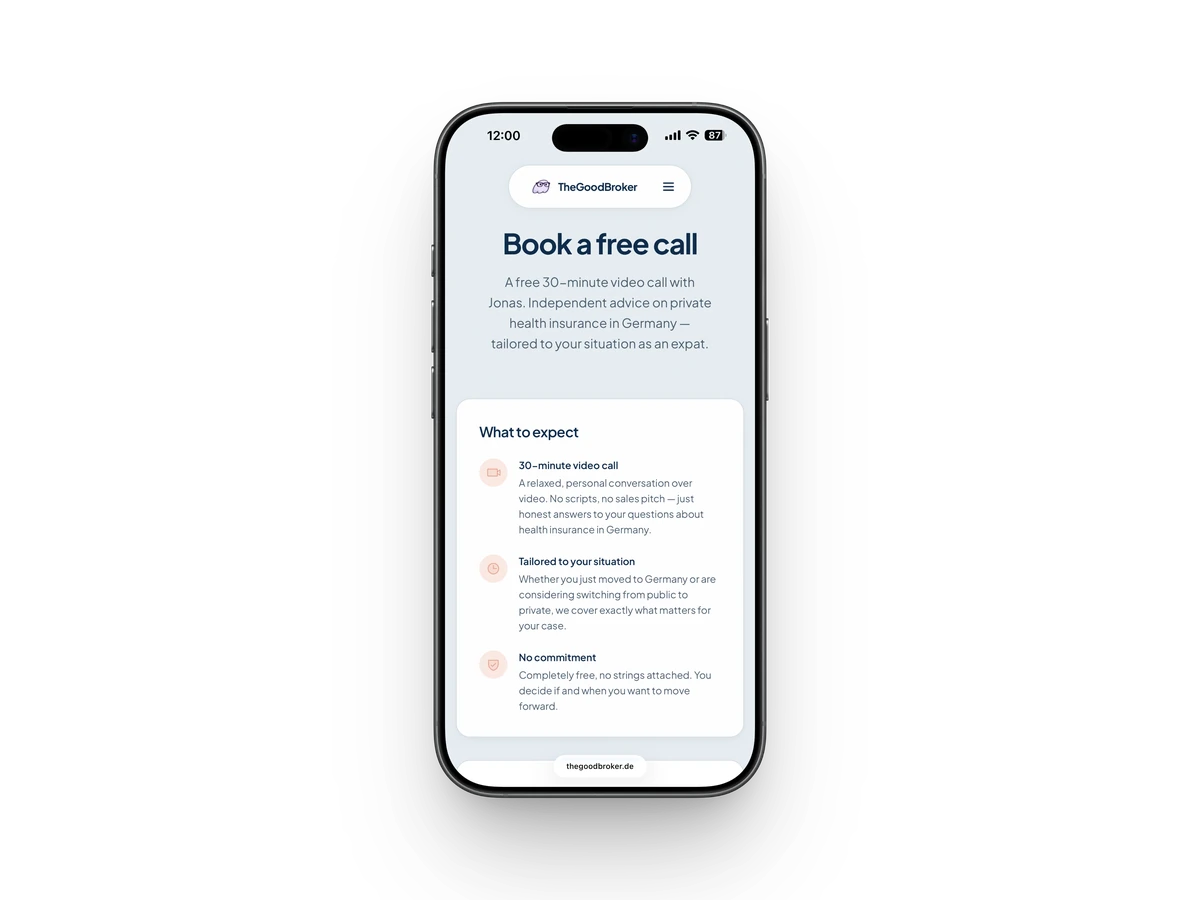
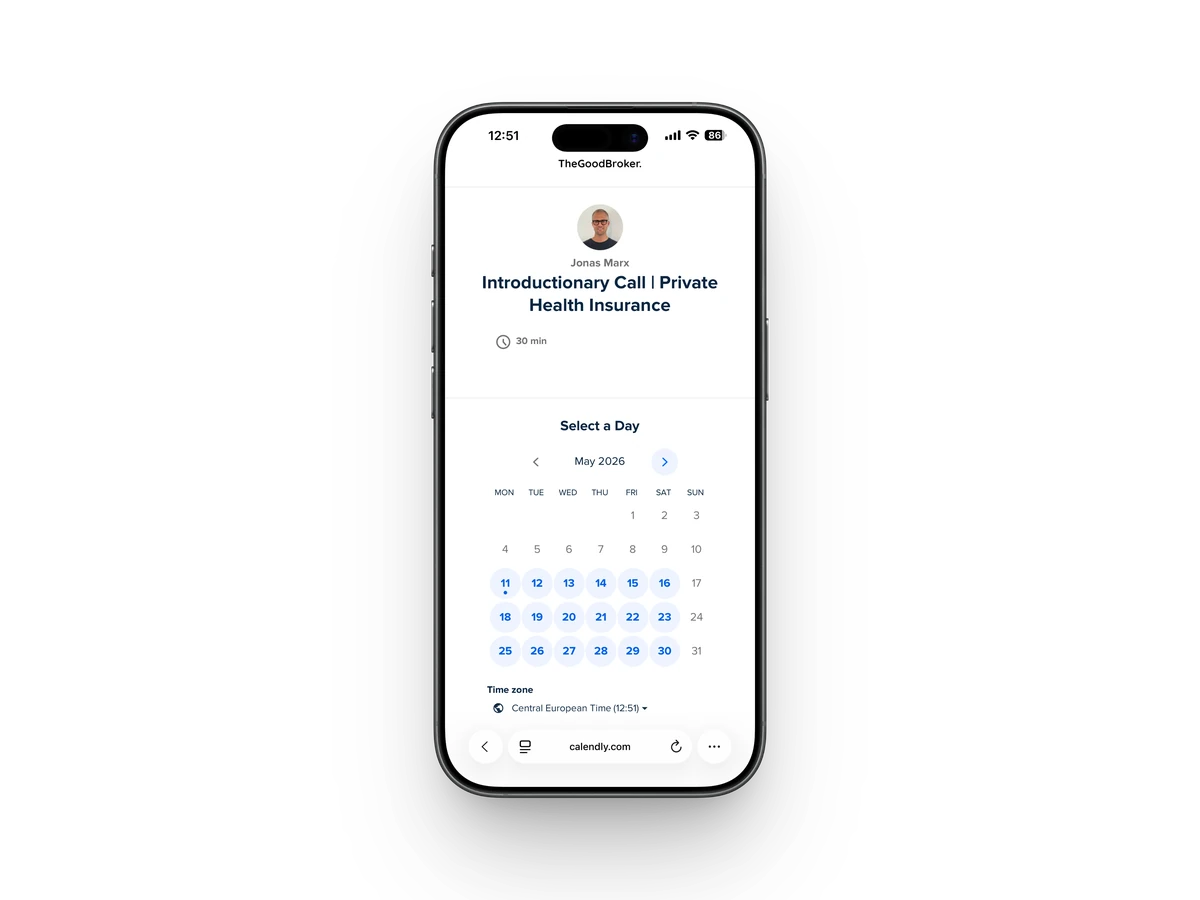
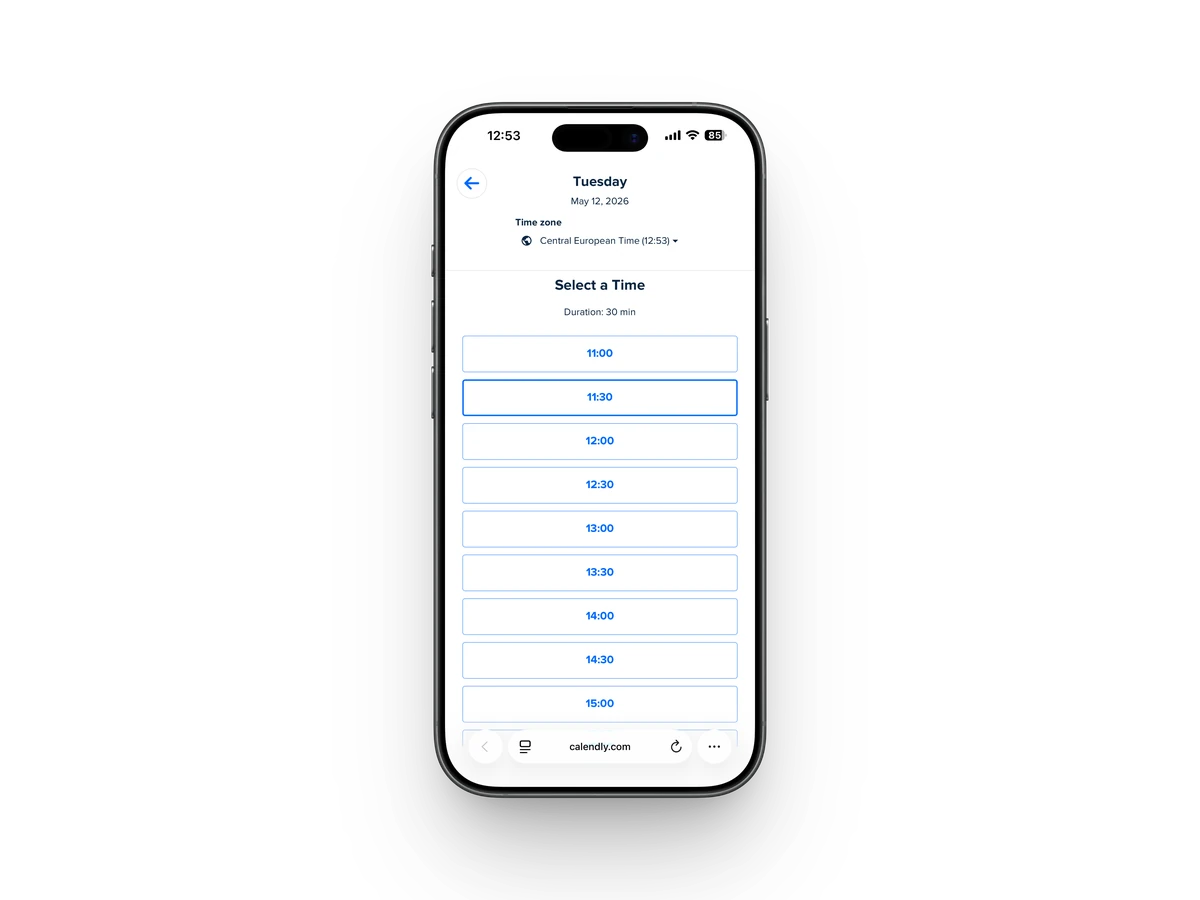
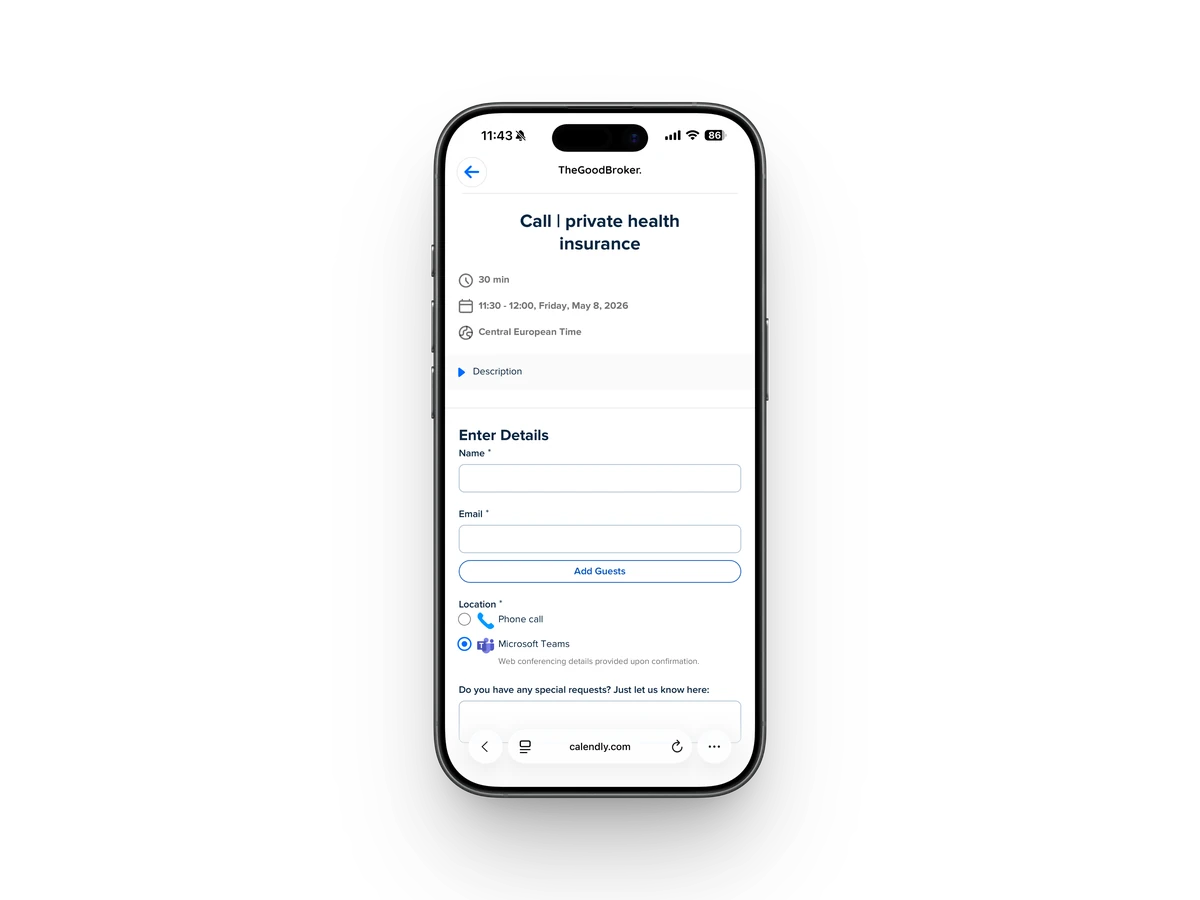
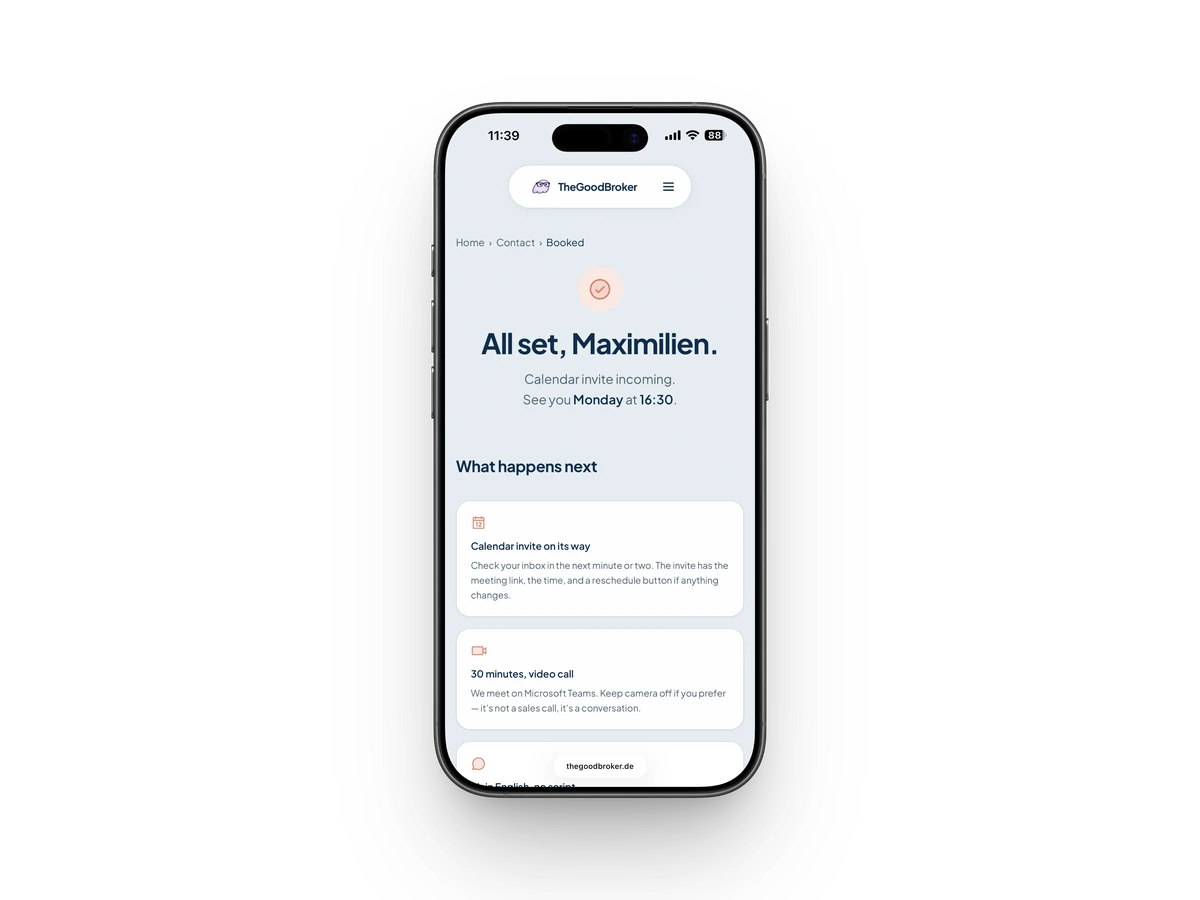 Book a call
Start with a 30-minute call.
A free call in plain English about your situation, plans, health and family. You ask, we ask, and you leave knowing what fits. The Zoom link arrives by email as soon as you book.
 The shortlist
Your shortlist, explained.
Your best options, in English, with every trade-off on the table. You see exactly why one wins.
 The paperwork
We handle the paperwork.
Anonymous pre-checks across insurers before you apply, then every form filled in correctly the first time.
 The start
Covered on your date.
Your insurer confirms your cover and start date in writing. If you are employed, your employer pays its share from your first month.
- Long after the sign-up
Still here, years later.
We stay your contact for every question: an invoice, a letter from your insurer, a new job or a baby. Our clients hear from us every year.


Free 30-minute call · No commitment · Fully independent
Public or private. And what it actually costs.
Private health insurance
€250–300
a month · your share for private cover at 30, after your employer’s share (2026)
Public health insurance
€648
a month · your share for public cover at the maximum, after your employer’s share (2026)
Employees can go private in a new job over €77,400 a year (2026), the self-employed at any income.
Who is eligible for private health insurance (PKV) in Germany?
How much does private health insurance cost for a young professional?
Does my employer contribute to PKV costs?
What is the Beitragsbemessungsgrenze (BBG)?
Is the advice really free, even after I sign?
Can I switch back to public insurance later?
What is the difference between GKV and PKV?
Are my family members covered under PKV?
What happens to my PKV if I leave Germany?
Do I need a health check to get PKV?
Is PKV worth it for freelancers?
Start with one call
Jonas MarxFounder, licensed insurance broker
Thirty minutes on Zoom, in English. No cost, no commitment.
- Which system fits you
- What it costs, or how to pay less
- Your earliest start date
- Your own questions
Prefer to write first? Email us at info@thegoodbroker.de.
From the blog
Read before you decide

How do you find a good private health insurance broker in Germany?
How to find a good private health insurance broker in Germany: broker or agent, the register check, how brokers are paid, the questions to ask before you sign and the warning signs.

Do you pay private health insurance during parental leave in Germany?
Your private premium runs on during parental leave, without your employer's share. What you pay in 2026, and how part-time work, a deductible or a premium suspension lower it.

I am a voluntary member of public health insurance in Germany: should I switch to private?
Voluntary member of German public health insurance? In 2026 you pay up to €648 a month as an employee; private cover costs €250 to €475 after the employer's share. How to switch.